Justice Ministry Extends K-ETA Exemption Through Year-End, Yet Travelers Keep Wasting 10,000 Won Not Knowing It

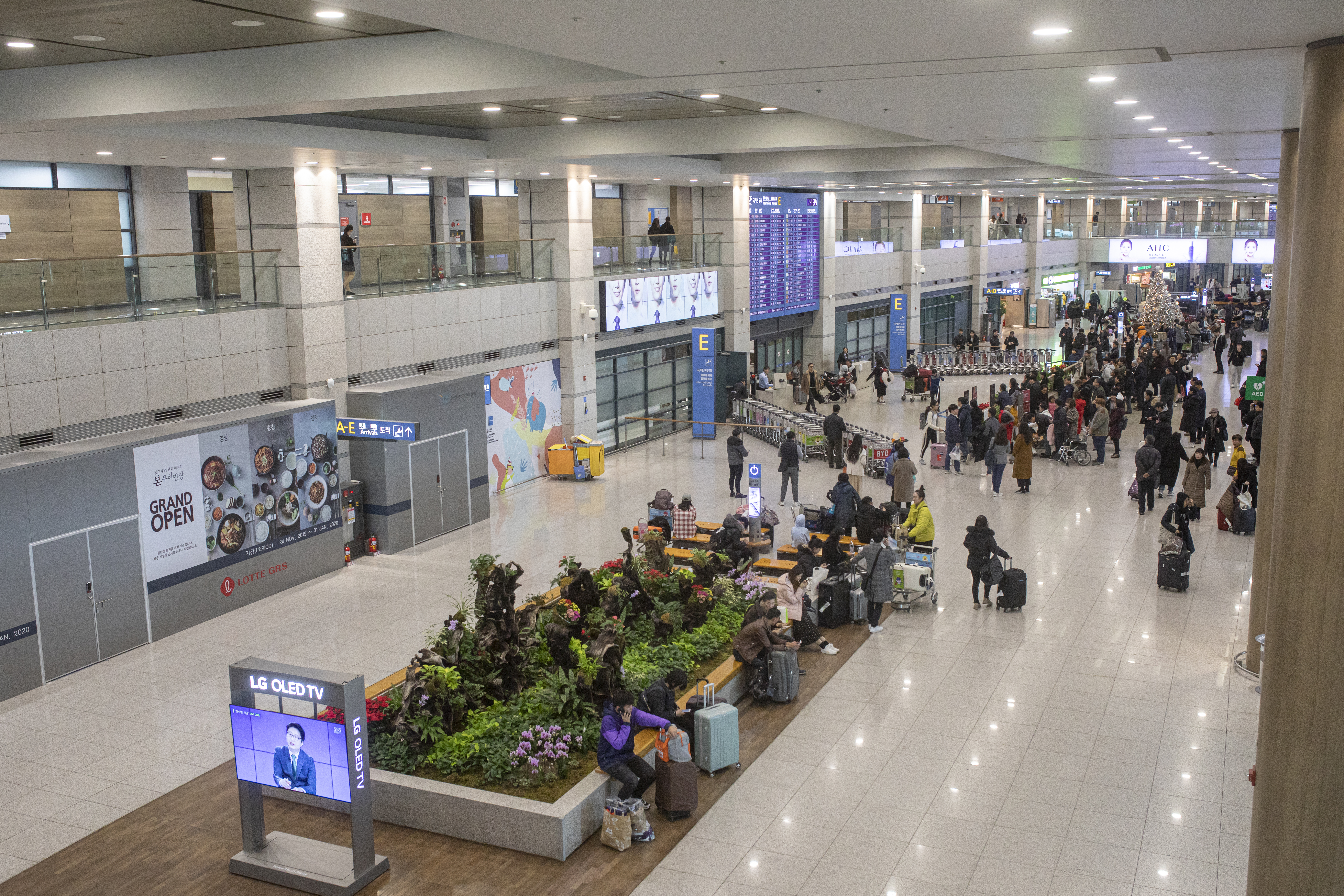
At Incheon Airport's Terminal 1 arrival hall last week, an American traveler vented to an immigration officer, "I rushed to pay 10,000 won for a K-ETA yesterday because I thought I needed one, only to find out I was exempt the whole time." In the same line, another traveler had assumed the opposite — that exemption applied to them — and only discovered just before boarding that their nationality was not among the 22 exempt countries, sending them scrambling. Both mix-ups stemmed from not checking official information: the first wasted roughly 10,000 won, the second risked being denied boarding altogether.
AT A GLANCE: Korea's Ministry of Justice announced on December 26, 2025 that it would extend the temporary K-ETA exemption for one more year, from January 1 through December 31, 2026 (Korea Standard Time). The exemption covers nationals of 22 countries and regions, including the United States, the United Kingdom, Canada, Australia, New Zealand, Japan, Singapore, Hong Kong, Macau, Taiwan, and ten European countries — Germany, France, Italy, the Netherlands, Norway, Poland, Spain, Sweden, Austria, Belgium, Denmark and Finland. Even exempt travelers may still apply voluntarily, since doing so waives the arrival-card requirement on entry. For nationals who do need a K-ETA, the fee is 10,000 won (plus roughly 3% online payment charge), and an approved authorization is valid for three years (or until the passport expires, if sooner). Applications are accepted only through the official website (k-eta.go.kr) or its mobile app.
Processing time is another common point of confusion. The official K-ETA site states results are usually issued "within 72 hours," but also explicitly warns that processing "may take longer than 72 hours depending on the volume of applications and the applicant's circumstances." Reviews are handled strictly in the order received, with no expedited option. As a result, travelers who apply at the last minute every year find themselves stuck at check-in waiting for approval that never arrives in time. The official guidance recommends applying at least 72 hours before boarding a flight or ship.
The deeper issue is the temporary nature of the exemption itself. First introduced in April 2023 and repeatedly extended through 2023–2025, the measure has fueled a misconception that it has quietly become permanent. In fact, each extension is a fresh one-year decision, and this latest extension — made "to boost tourism" — runs only through the end of 2026. Whether it will be extended again for 2027 has not yet been officially announced. Even nationals of exempt countries need to check the latest notice each time, or they risk the opposite mistake: showing up without a K-ETA after an exemption has quietly lapsed, only to be denied boarding.
The bottom line for anyone flying to Korea this October is simple: check directly on k-eta.go.kr whether your nationality is among the 22 exempt countries and regions. If it isn't, apply and pay the 10,000-won fee at least 72 hours before departure. If it is, there is no need to pay anything at all. A few minutes of checking is what stands between a traveler and a wasted 10,000 won, days of delay, or in the worst case, being turned away at boarding.
Read next
- 2026-11-23Seoul Global Center 2026: Free Visa, Job, and Admin Counseling Without an Alien Registration Card
- 2026-11-23Incheon Airport Currency Exchange Hours 2026: Which Counters Stay Open 24/7
- 2026-11-23Peach Gimpo-Kansai Flights 2026: Schedule, Current Fare Status, and Why the 49,000 Won Deal Is Over
- 2026-11-22Gongju Day Trip 2026: KTX vs. Bus Fares and the Walk from Jemincheon to the Geumgang
- 2026-11-22Korea Working Holiday Visa: Who Qualifies, How Long You Stay
- 2026-11-22Permanent Residency F-5 Korea: Who Qualifies, Fine Deadline