Landing at Incheon at 1:30 a.m.? Here's what to do before the 5:15 first train
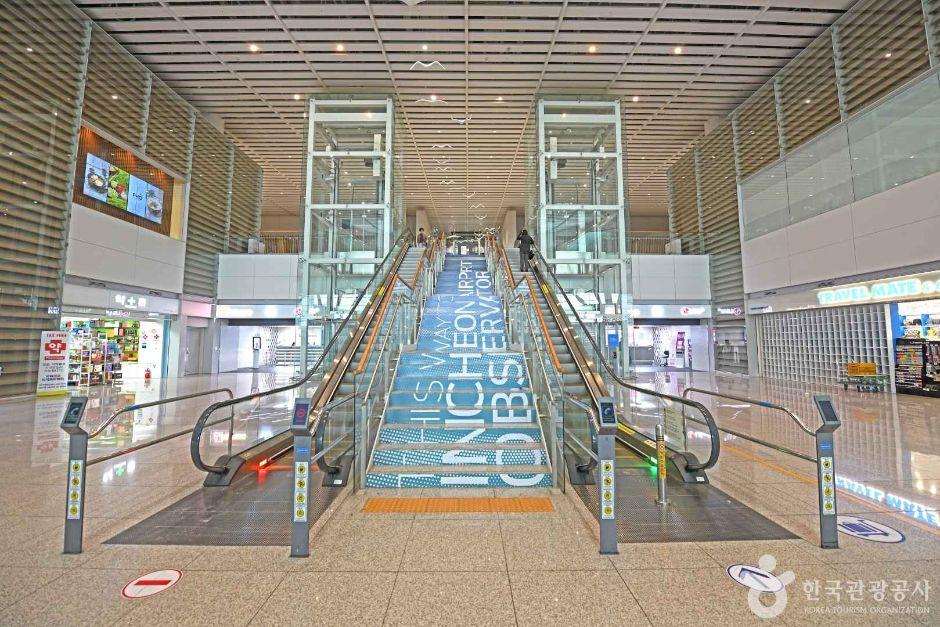
It is 1:40 a.m. at the arrivals hall of Incheon International Airport's Terminal 1. A backpacker in her twenties has just landed after a 14-hour journey from Lithuania via Istanbul, wheeling her suitcase out of customs. Half the overhead transit signboards are already dark, and there is no announcement coming from the direction of AREX, the airport railway linking Incheon Airport to Seoul Station. Her map app says the subway would get her to Seoul Station in just over an hour — except that subway stopped running three hours ago. What options does she actually have left?
At a glance — AREX's Direct Train runs its last departure from Terminal 2 at 22:40 and first departure at 05:15 (per Korail AREX), while the slower All-Stop Train, serving every station, runs a bit later, with last departure from Incheon Airport around 23:40 and first around 05:20. Airport Limousine bus route 6001 (to Seoul Station/Dongdaemun) has its last bus at 23:09 from Terminal 1 and 22:49 from Terminal 2, with first buses at 05:29 and 05:39. After that, dedicated overnight buses N6000 (Gangnam Express Bus Terminal), N6002 (Cheongnyangni), N6701 (Dongdaemun Design Plaza) and N6703 (Gwangnaru) run from Terminal 2 between 23:20 and 04:20, at intervals of 30 minutes to two hours, for 17,000-18,000 won (per Incheon International Airport Corporation). Taxis start at a metered base fare of 4,800 won (regular) or 7,000 won (deluxe/large), with late-night surcharges toward Seoul of 20% (22:00-23:00 and 02:00-04:00) and 40% (23:00-02:00). Taxi stands are at Terminal 1, 1F, bays 5C/6C/6D (regular) and 7C/8C (deluxe/large), and at Terminal 2, 1F, bay 7C (regular, Seoul-bound) and 7D (deluxe/large).
This kind of pre-dawn arrival is far from unusual. Long-haul flights from Europe and North America routinely land at Incheon around midnight because of time-zone arithmetic, and transit passengers connecting through the Middle East or Southeast Asia are often funneled onto early-morning arrivals too. Regardless of nationality, it is a time slot nearly every visitor to Korea eventually runs into. The trouble is that ground transportation toward Seoul shuts down almost all at once: the subway's last trains stop around midnight, AREX's direct trains finish in the 10 p.m. hour, and city buses have already returned to their depots.
Start with AREX. The direct train, linking Seoul Station and the airport in 43 to 51 minutes, stops first — its last Terminal 2 departure is 22:40. The all-stop train, serving every station along the line, holds on a little longer, with a last departure from Incheon Airport around 23:40, but that is still no help to anyone landing after midnight. The cheapest, most familiar option disappears earliest.
Airport Limousine buses — long-distance coaches running direct to major points in the city — follow a similar pattern. Route 6001's last bus leaves Terminal 1 at 23:09 and Terminal 2 at 22:49, both before midnight. But service does not vanish entirely after that. According to Incheon International Airport Corporation, dedicated overnight routes N6000 (Gangnam Express Bus Terminal), N6002 (Cheongnyangni), N6701 (Dongdaemun Design Plaza) and N6703 (Gwangnaru) run from Terminal 2 between 23:20 and 04:20. Intervals stretch from 30 minutes to as long as two hours, and fares of 17,000-18,000 won run higher than daytime limousines, but for anyone arriving past midnight, these are effectively the only public transit left.
Once public transit is gone, a taxi is the most reliable option. Per Incheon International Airport Corporation's guidance, the base metered fare is 4,800 won for a regular taxi and 7,000 won for a deluxe or large taxi, with late-night surcharges toward Seoul of 20% (22:00-23:00 and 02:00-04:00) and 40% (23:00-02:00) added on top. The total to downtown Seoul varies significantly with distance and time of night, so it is worth confirming the meter is running before departure. Taxi stands are at Terminal 1, 1F, bays 5C/6C/6D for regular taxis and 7C/8C for deluxe/large taxis, and at Terminal 2, 1F, bay 7C for Seoul-bound regular taxis and 7D for deluxe/large taxis.
For travelers who would rather not pay for a taxi, or who decide to simply wait out the night at the airport, there are options. Terminal 1's fourth-floor duty-free zone has a bed-style rest area called the Nap Zone, plus sofa-and-recliner areas called the Cozy Zone (east side) and Relax Zone (west side), all free and open 24 hours; Terminal 2 has its own Nap Zone and a public lounge. Transit passengers can also book a paid Transit Hotel, and 24-hour saunas — Spa On Air at Terminal 1 and Spa@Home at Terminal 2 — stay open around the clock.
Gimpo International Airport, which mostly handles domestic flights, rarely sees late-night international arrivals, so the gap there is less severe — though it is not a complete blank either. According to operator notices, route N6002 also stops at Gimpo, with a first departure around 23:40 and a last around 03:40 (provisional) — worth double-checking against the latest published schedule before relying on it.
The real fix is to check before you land. Look up your flight's actual arrival time on the airline's app, and if it falls after midnight, check the Airport Limousine or night-bus apps — or Incheon International Airport Corporation's website — for that day's actual schedule. If you have a long layover, saving the location of the Transit Hotel or a Nap Zone on your map in advance saves precious minutes of wandering a dim arrivals hall. Standing under a darkened signboard at 1:30 a.m. is not itself the problem — whether you saw it coming is what decides how the next few hours feel.