Mayak gimbap runs 3,000 won, bindaetteok 5,000 won, and yukhoe 20,000-plus won — at stalls with no price list, ask before you sit down.

A few first-time foreign visitors stopped short as they stepped into Gwangjang Market's food alley in downtown Seoul. In front of a stall where a vendor was frying bindaetteok on a huge griddle, there was no menu board and no price tag in sight. A shopkeeper next door waved them toward a seat, but the tourists kept their translation apps open, trying to check the price first. Amid rows of open-air stalls thick with the smell of frying oil and the sound of haggling sits a market that has fed Seoulites for more than a century, and has recently become one of the city's most popular food destinations for foreign tourists.
At a glance: Gwangjang Market is located at 88 Changgyeonggung-ro, Jongno-gu, Seoul, a three-minute walk from Exit 8 of Jongno 5-ga Station on Subway Line 1. According to the Seoul Tourism Organization's official travel website, Visit Seoul, the market overall operates daily from 9 a.m. to 6 p.m. (closed Sundays), while the food alley runs daily from 9 a.m. to 11 p.m. Prices for signature dishes are reported at around 3,000 won for a roll of mayak gimbap, around 5,000 won for a piece of bindaetteok (versions with meat or shrimp run closer to 10,000 won), and in the 20,000-to-23,000-won range for a plate of yukhoe.
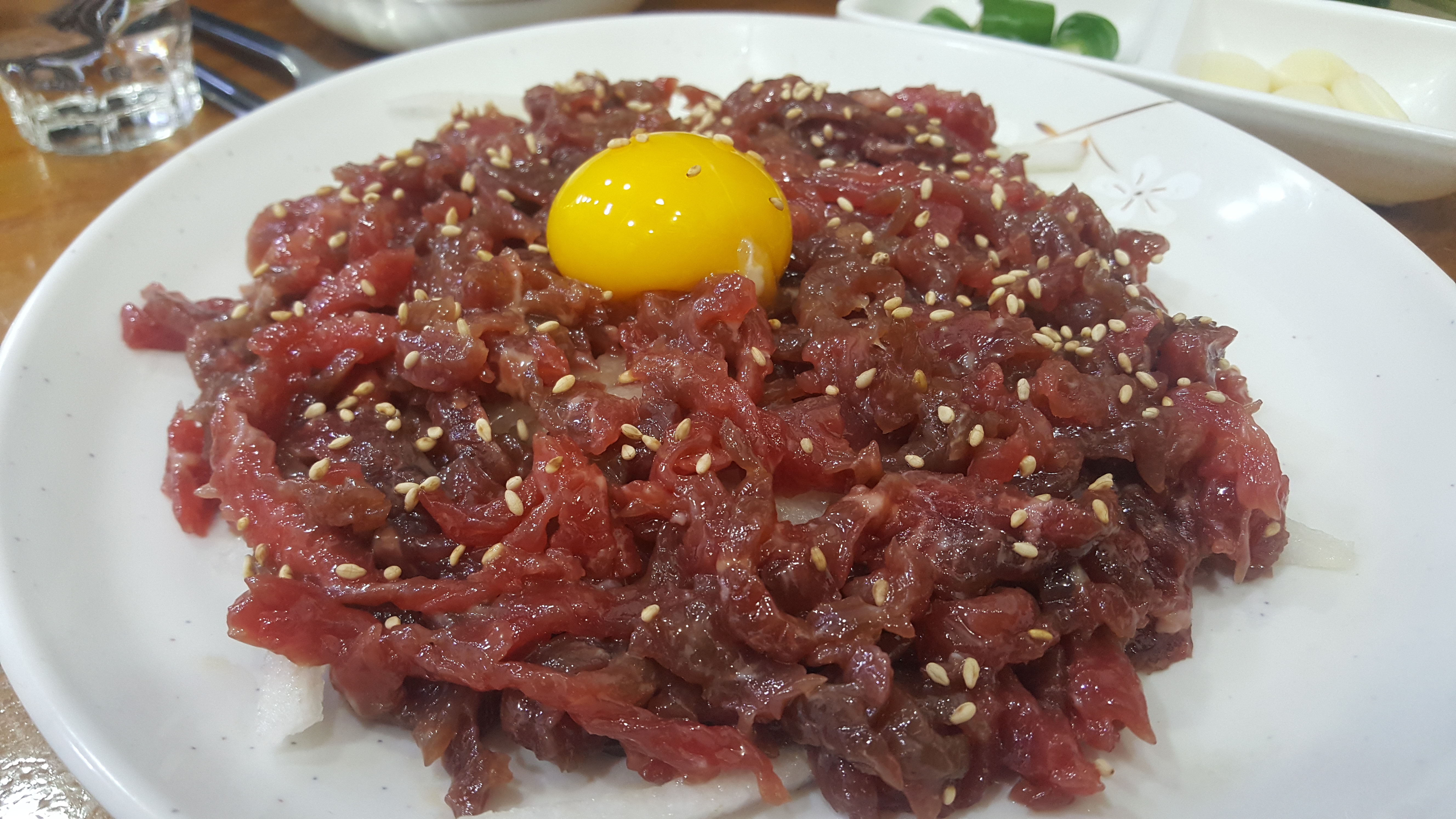
Mayak gimbap, literally 'drug gimbap,' are bite-sized rolls dipped in a mustard-soy sauce, named for how addictive they are. Bindaetteok, a thick pancake made from ground mung beans mixed with pork and vegetables, is considered the market's signature dish. Yukhoe, thinly sliced raw beef seasoned and topped with an egg yolk, is often served as yukhoe-bibimbap mixed with rice, which many stalls sell in the 10,000-to-15,000-won range. Portion size and toppings vary by stall, however, so prices can differ even for the same dish.
Overcharging claims have also recently surfaced. In April this year, a foreign YouTuber posted a video showing a market stall charging 2,000 won for a 500-milliliter bottle of water, sparking controversy. When asked why it cost so much, the vendor reportedly said it was because there are so many foreigners. Following a disciplinary decision by the Gwangjang Market street vendors' association, the stall was suspended from business for three days, from April 22 to 24. The association told reporters the dispute stemmed from a misunderstanding over vendors pouring water from large bottles into cups, while acknowledging that, since each stall is an independent business, prices cannot be uniformly enforced, though it said it would use the incident to encourage fairer pricing.
Visitors are advised to ask the price before sitting down, or to check any posted price list. Prices can differ between stalls at the main crossroads and those further down the alley, so comparing a few stalls before choosing one is worth the extra few minutes. Some stalls accept cash only, so it helps to carry small bills.
Read next
- 2026-10-03Both HYBE Insight and SMTOWN coexartium have shut down, and the one place where a ticket can actually be bought right now is the Korea Popular Music Museum in Gyeongju, at 15,000 won for adults.
- 2026-10-03Admission to Gyeongbokgung and Changdeokgung is 3,000 won each, but wearing a complete hanbok lets both Koreans and foreigners enter free.
- 2026-10-03Gyeonggijeon Shrine costs 3,000 won to enter while Jeondong Cathedral is free, and it's just a 25-minute bus ride from Jeonju Station to the village's alleys.
- 2026-10-03Buying a SIM at Incheon Airport's arrival hall can mean waiting 30 minutes to an hour in peak season, but downloading an eSIM before departure skips that line entirely.
- 2026-10-02Show Up at Gyeongbokgung on Tuesday or Changdeokgung on Monday and You'll Find It Closed
- 2026-10-02Lining Up at Five Ticket Booths? One Integrated Ticket Covers All Five for 6,000 Won