Prayer Time, No Prayer Room: An Indonesian Traveler's Incheon Arrival
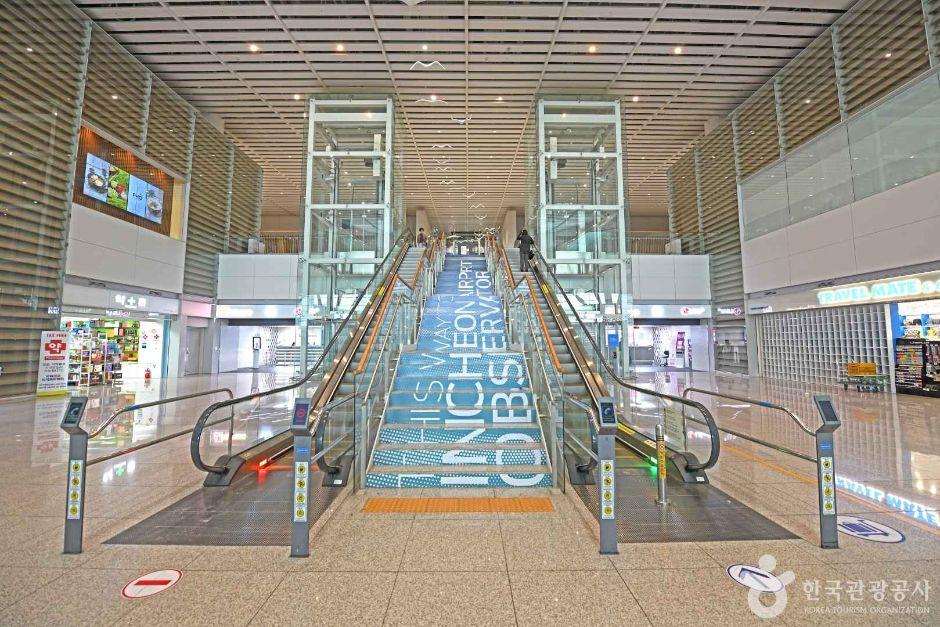
It's noon on a Friday in mid-September, in the arrivals hall at Incheon Airport. The A family, in from Jakarta, has just cleared a 40-minute immigration queue. A phone alarm goes off — Dhuhr, the midday prayer. By the time they collect their bags, clear customs and step into the arrival lobby, they haven't seen a single "prayer room" sign. There's a reason: both of Terminal 1's prayer rooms sit in
side the duty-free zone, reachable only by passengers holding an outbound boarding pass, and Terminal 2's prayer room is tucked in a corner of the basement level, easy to miss entirely. The scene is becoming common. Citing Korea Tourism Organization data, Hanin Post reported that Indonesian arrivals to Korea reached 267,000 in January-September 2025, up 36.2% from the same period in 2019 and maki
ng Indonesia the fourth-largest ASEAN source market. As more travelers arrive from the world's most populous Muslim-majority country (about 270 million people, roughly 87% Muslim), the everyday checklist of prayer, halal food and entry paperwork increasingly collides with airport logistics. ■ K-ETA: the first hurdle before departure Korea's Electronic Travel Authorization costs 10,000 won plus a 3
% online processing fee, credit card only. Korea's immigration authority (Ministry of Justice) says review usually takes up to 72 hours but can run longer, and the fee is non-refundable even if the application is rejected. Photo specs are strict — JPG, under 100KB, under 700x700 pixels, face covering at least 75% of the frame — and travelers who apply at the last minute often end up re-shooting an
d re-paying after a rejected photo. ■ No prayer room past immigration Per Incheon International Airport Corporation, Terminal 1 has just two prayer rooms — near Gate 24 on the 3rd floor and in the west transfer lounge on the 4th floor — both open 24 hours but accessible only from the departures duty-free zone. Passengers who just landed and are heading toward arrivals simply cannot reach them. Te
rminal 2 has partly closed the gap with an additional prayer room in the general (non-secure) area on B1. ■ 278 halal-serving restaurants, only 9 formally certified Kukinews (March 2024) reported 278 halal or halal-friendly restaurants nationwide, 122 of them in Seoul — but only 9 in Seoul carry full halal certification from the Korea Muslim Federation (KMF). The Korea Tourism Organization effect
ively shelved its Muslim-friendly restaurant classification program in 2022 due to low restaurant participation, so no official list stays current. ■ Quick reference · K-ETA: k-eta.go.kr, 10,000 won + 3% online fee (credit card only), review usually within 72 hours (can be delayed), fee non-refundable if rejected → apply at least a week before departure. · Incheon prayer rooms: T1 — 3F near Gate 2
4 / 4F west transfer lounge (departures duty-free zone only, 24 hours); T2 — B1 general area (arriving passengers can use it too). · Halal restaurants: 278 nationwide / 122 in Seoul; only 9 KMF-certified in Seoul, mostly clustered around Itaewon. Don't expect the airport to sort things out on its own. Apply for K-ETA at least a week ahead to avoid photo-rejection re-payments, look up Terminal 2's b
asement prayer room or your hotel in advance rather than counting on Terminal 1's arrivals area, and save Itaewon's halal restaurant cluster to your map app before you land. With Indonesian arrivals still climbing, lowering the next "threshold of arrival" is as much on Korea's airports and tourism authorities as it is on travelers' own preparation. Korea Tourism Times Editorial Desk